On a Sunday night that will echo through NFL lore, three teams refused to quit — and changed the trajectory of their seasons in the process. The Dallas Cowboys erased a 21-point deficit against the Philadelphia Eagles, the Detroit Lions clawed back from 10 down with pure grit, and the Kansas City Chiefs survived a chaotic fourth quarter against the Indianapolis Colts. All three wins happened in Week 12 of the 2025 NFL season, and each carried its own flavor of magic — and statistical absurdity.
How the Cowboys silenced doubters — and the Eagles
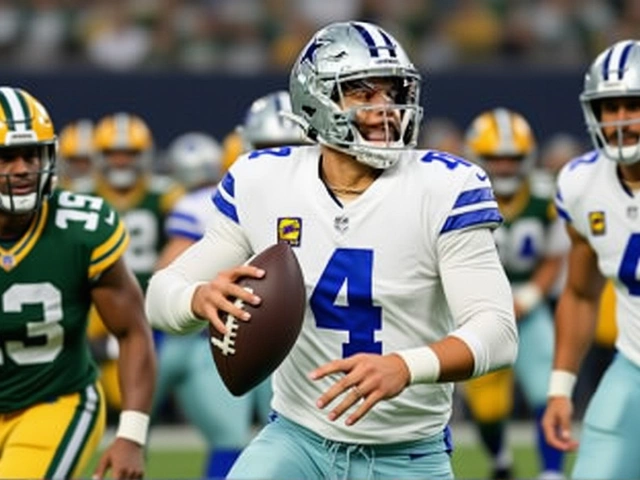
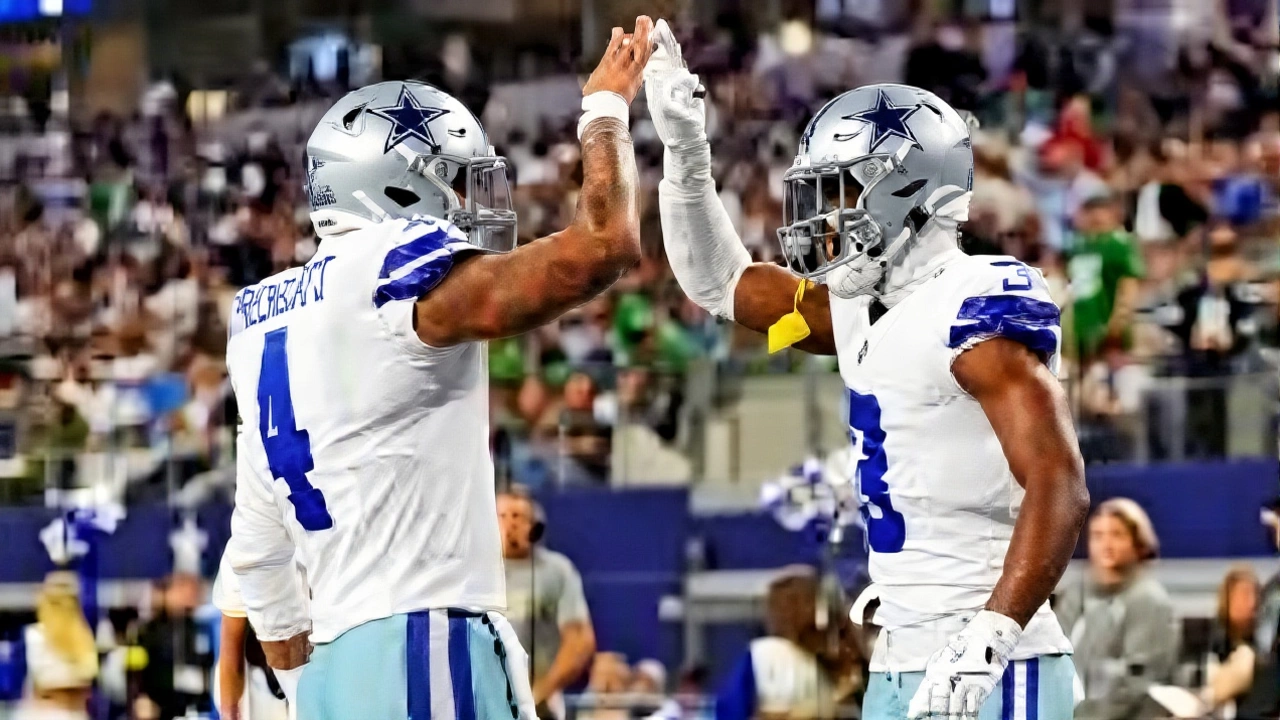
The Cowboys didn’t just win. They rewrote the script. Down 28-7 midway through the third quarter, they didn’t panic. They didn’t force throws. Dak Prescott, cool as ice in the pocket, found CeeDee Lamb on a 42-yard slant that sliced through the Eagles’ secondary. Then, a 14-yard scramble on third-and-11. Then, a 7-yard touchdown pass to rookie tight end Kyle Pitts — yes, *that* Kyle Pitts, now in Dallas after a surprising midseason trade. By the time the clock hit 0:03, the scoreboard read 31-28. No turnovers. No panic. Just execution. Analysts later noted the Cowboys’ second-half defense allowed just 3 points — the first time since 2018 they’d held an opponent scoreless over a full half after trailing by 20+. "They didn’t just shut them out," said NBC’s Jac Collinsworth on a November 25 YouTube breakdown. "They made them feel like they were never supposed to be ahead."The Lions’ run game: A masterclass in timing and toughness
While the Cowboys relied on precision, the Lions went old school — and it worked brilliantly. Down 17-7, head coach Dan Campbell didn’t tweak the playbook. He doubled down on it. Jared Goff, normally known for his deep-ball accuracy, completed 16 of 17 passes — but not to the outside. All 17 came to backs and tight ends lined up in the backfield. NFL Next Gen Stats confirmed it: the most completions to backfield receivers in a single game since 2017. Only eight of his 38 attempts traveled more than 10 yards in the air. That’s not a sign of weakness. It’s a sign of genius. Enter Jahmyr Gibbs. The 2023 first-rounder turned into a human highlight reel. A 49-yard burst up the middle in the fourth quarter. Then, in overtime, a 69-yard scamper that left three defenders grasping at air. He finished with 172 yards on 12 carries — a 71% success rate, per ESPN’s metrics. The Lions rushed for 237 yards total. That’s the most by any team since the 2024 season opener. "They didn’t just run the ball," said former Colts coach Tony Dungy. "They ran it when it mattered. And they ran it like they owned the line of scrimmage."The Chiefs’ miracle: Surviving chaos, powered by Kevin Byard
The Chiefs’ win over the Colts was less a comeback and more a miracle stitched together by defense and dumb luck. Kansas City’s average drive started at their own 20-yard line. Only one of 11 possessions began beyond the 30. Their special teams were a mess — three penalties on returns, two of them holding calls that killed momentum. Yet they won 24-21. How? Enter Kevin Byard. The safety, playing with a fractured rib and a secondary decimated by injuries, had five interceptions this season — three of them in the fourth quarter of this game alone. One pick came after two Chiefs defenders, Bryan Cook and Trent McDuffie, collided trying to intercept a pass that should’ve been a game-sealing pick-six for the Colts. Another came on third-and-goal when Anthony Richardson, the Colts’ QB, missed an open receiver in the end zone under pressure from Chris Jones. "He’s the voice of that secondary," said Rodney Harrison on the NBC recap. "When the defense is falling apart, he’s the one yelling, ‘We’re not done.’" And then there was Kareem Hunt. On third-and-four late in the fourth, Hunt caught a screen, juked two defenders, and picked up 18 yards. The drive ended in a touchdown. "That’s not a play you draw up," said Andy Reid afterward. "That’s a play you pray for."Why these comebacks matter beyond the standings
These aren’t just feel-good stories. They’re blueprints. The Cowboys proved they can win without a dominant offense — just grit, timing, and a quarterback who trusts his receivers. The Lions showed that even a high-powered passing team can win by going nuclear on the ground. And the Chiefs? They reminded everyone that championship teams don’t need perfect games. They need players who refuse to lose. The ripple effects are already visible. The Cowboys jumped from 10th to 3rd in the Week 13 Power Rankings. The Lions, now 9-3, are tied for the NFC North lead. And the Chiefs? They’re 10-2, and suddenly, the idea of them losing a playoff game feels like a fantasy.What’s next?
Dallas faces the 49ers next week — a rematch of their Week 4 thriller. Detroit travels to Green Bay, where the Packers’ defense has allowed 30+ points in three of their last four. And the Chiefs? They host the Buffalo Bills, who’ve lost two straight but still boast the league’s most explosive offense. One thing’s clear: the NFL isn’t about who’s best on paper anymore. It’s about who refuses to fold when the lights are brightest.Frequently Asked Questions
How did the Lions’ offensive strategy differ from their usual approach?
Normally, the Lions rely on deep passes from Jared Goff, but in this game, 16 of his 17 completions went to backs or tight ends lined up in the backfield — a tactic that minimized pressure and maximized yards after catch. Only eight of his 38 attempts traveled more than 10 yards in the air, a drastic drop from his season average of 14. This shift, orchestrated by Dan Campbell, exploited the Eagles’ aggressive front seven and allowed Jahmyr Gibbs to explode for two long touchdowns.
Why was Kevin Byard so critical to the Chiefs’ win?
With three starting defensive backs out due to injury, Byard became the de facto leader of a depleted secondary. His five interceptions this season include three in the final 12 minutes of the Colts game, two of which came on critical third downs. He didn’t just make plays — he made *noise*. His vocal leadership kept the defense organized despite constant personnel changes, and his awareness turned what should’ve been Colts touchdowns into turnovers.
What role did special teams play in the Chiefs’ comeback?
Special teams nearly cost the Chiefs the game. They had three penalties on kick and punt returns, forcing them to start 10 of 11 drives inside their own 20-yard line. Only one possession began beyond the 30, and that drive — which started at the 44 — led to their only fourth-quarter touchdown. Without those penalties, Kansas City likely wins by double digits. Instead, they won by three, proving their defense and offense could overcome terrible field position.
Did the Colts’ offense deserve to win?
Statistically, yes. Anthony Richardson didn’t throw an interception or get sacked, and the Colts controlled time of possession by nearly 10 minutes. But they missed three red zone opportunities — including a third-down pass to an open receiver that Richardson underthrew under pressure. Their offense was efficient, but not lethal. And when it mattered most, they couldn’t finish. The Chiefs’ defense, led by Byard, made them pay.
How does this affect the NFC playoff picture?
The Cowboys’ win vaulted them into the NFC’s top four, putting them in position to host a playoff game. The Lions, now 9-3, are tied with the Packers for the division lead, and their run-heavy identity makes them dangerous in cold-weather games. Meanwhile, the Eagles’ loss dropped them to 7-5, and they now face a must-win stretch against the Buccaneers and Commanders. The playoff race just got wilder.
What does this say about Dak Prescott’s leadership?
Prescott didn’t throw for 400 yards or four touchdowns — he threw for 212 and two scores, with zero picks. His leadership was in poise, not stats. He trusted his receivers on contested catches, stayed calm after two early turnovers, and led three consecutive scoring drives in the final 15 minutes. This wasn’t a vintage Prescott performance. It was a mature one — the kind that wins championships.