
When the world locked down in 2020, sex workers didn’t just lose income-they lost safety, community, and control. Street-based workers, massage parlors, and even private in-home providers suddenly had to figure out how to survive without face-to-face contact. For many, the answer wasn’t just switching platforms-it was rebuilding an entire business model from scratch. The shift wasn’t optional. It was survival.
Some turned to digital platforms to keep clients connected. Others started live shows, subscription content, or virtual sessions using encrypted apps. One worker in Manila began offering customized video calls that mimicked the intimacy of in-person encounters, while a former escort in Toronto launched a Patreon with guided relaxation audio tracks. And yes, some explored international markets-like those offering services tied to filipina escort dubai networks, where demand shifted online even before the pandemic hit. These weren’t just stopgaps; they became long-term revenue streams.
What Got Lost When the Doors Closed
Before COVID, many sex workers relied on physical spaces to screen clients, build trust, and control their environment. A hotel room, a private apartment, even a well-lit corner on a known street-these weren’t just locations. They were risk buffers. Without them, the dangers didn’t disappear. They changed shape.
Online, predators became harder to spot. Scammers posed as clients. Payment platforms froze accounts with no warning. Some workers reported being banned from OnlyFans for using the word "sex" in their bios. Others lost access to Venmo and Cash App after clients flagged transactions as "suspicious." The digital world didn’t make things safer-it just moved the risks elsewhere.
How Virtual Work Actually Works
Virtual work isn’t just video calls. It’s a full ecosystem. Successful workers now treat their online presence like a small business. They invest in good lighting, quiet spaces, and backup internet. They use platforms like ManyVids, Clip4Sale, and FanCentro-not just for content, but for scheduling, payments, and client management.
Some created themed experiences: "Movie Night" with curated playlists, "Cooking Together" where clients watch while the worker prepares a meal on camera, or "Storytime" where they read erotic fiction aloud. These aren’t gimmicks. They’re ways to build emotional connection without physical contact. One worker in Berlin told me she doubled her income after adding a monthly "Letters from Me" service-handwritten notes mailed to subscribers, signed and sealed.
Automation helps too. Chatbots handle common questions. Scheduling tools lock in appointments. Payment gateways like Stripe and PayPal (when they allow it) reduce friction. The goal isn’t to replace human interaction-it’s to protect it.
Building Community in Isolation
Sex workers have always relied on peer networks for safety and advice. In person, that meant sharing tips over coffee, warning each other about bad clients, or covering for someone who was late. Online, those networks moved to Discord servers, encrypted Telegram groups, and private Facebook communities.
One group in the U.S. started a "Safety Swap" system: if a worker felt uneasy about a client, they’d post a vague alert-"11:30 PM, 3rd floor, red shirt"-and others would confirm if they’d seen that person before. No names. No details. Just enough to trigger caution. Within months, dozens of potential incidents were avoided.
These groups also shared resources: legal advice, mental health hotlines, tax tips for self-employed workers, even guides on how to set up a secure home studio with minimal equipment. The community didn’t just help people survive-it helped them adapt.

Money, Taxes, and the Digital Economy
Working online means dealing with money in ways most people never think about. Bank accounts get shut down. Cards get declined. Some workers now use cryptocurrency wallets, prepaid debit cards, or third-party payment processors that don’t ask questions. But even those come with risks.
Taxes are another headache. In the U.S., self-employed sex workers are still required to file income taxes-even if they’re not legally recognized. Many now use apps like Wave or QuickBooks Self-Employed to track earnings and expenses. Deductions? A new camera, lighting gear, internet bills, even coffee for clients during Zoom calls. One worker in Atlanta saved over $2,000 in deductions last year just by keeping receipts.
And while platforms take a cut-Usually 20% to 50%-many workers say it’s worth it. One former street worker in Los Angeles now makes more in a week online than she did in a month before. "I don’t have to worry about cops, or getting robbed, or someone slipping something in my drink," she said. "I just turn on my camera and work. It’s not perfect. But it’s mine."
What About Safety? The New Rules
Virtual doesn’t mean risk-free. But there are clear practices that reduce danger:
- Always use a second device to record sessions-no exceptions.
- Never share your real address, phone number, or full name.
- Use burner email accounts for client communication.
- Block screenshots and screen recording in your video software.
- Set boundaries before the session starts: "No requests for my location," "No sharing recordings," "No pressure to do anything I didn’t agree to."
Some workers now use services like Snoop or Geofeedia to monitor if their content is being reposted without permission. Others hire virtual assistants to handle client intake, so they never have to talk to strangers directly.
And if something goes wrong? There are now hotlines staffed by former sex workers who know exactly what to do. In the U.S., the Red Umbrella Fund and the Global Network of Sex Work Projects offer emergency support, legal referrals, and trauma counseling-all confidential.
The Future Isn’t Just Online-It’s Hybrid
COVID didn’t kill in-person work. It forced innovation. Now, many workers are blending both. A worker in Miami might do virtual sessions Monday through Thursday, then meet a trusted client in person on Friday. Another in London offers private in-home services but only after a full week of virtual vetting.
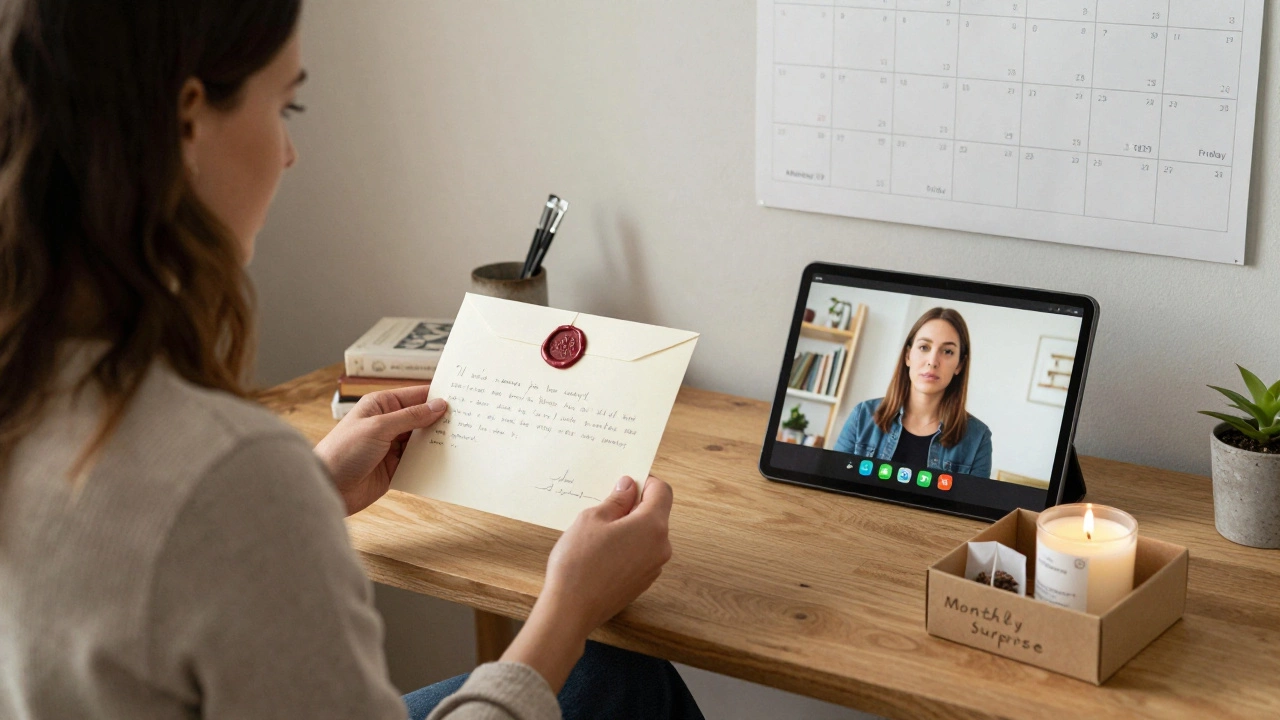
Some are even creating "hybrid packages": a 30-minute video call, followed by a mailed surprise-a handwritten letter, a candle, a small gift. These aren’t just sales tactics. They’re ways to keep intimacy alive in a world that’s become increasingly distant.
And as AI tools get smarter, some are experimenting with voice cloning for personalized audio messages or AI-generated erotic stories tailored to individual clients. It’s not about replacing humans-it’s about extending their reach.
One worker in Bangkok told me she now trains new workers on how to use AI tools to draft responses, manage bookings, and even create content outlines. "We’re not just surviving," she said. "We’re teaching each other how to thrive."
Why This Matters Beyond Sex Work
This isn’t just about sex workers. It’s about the future of labor. Gig workers, freelancers, creators, and caregivers-all of them are facing the same questions: How do you earn when physical presence isn’t an option? How do you stay safe when the world is watching? How do you keep your dignity when systems keep pushing you to the edges?
Sex workers were the first to be pushed online. They’re now showing others how to do it without losing themselves. Their tools, their rules, their boundaries-these are becoming blueprints for a new kind of work. One that’s flexible, self-directed, and fiercely protected.
And if you’re reading this and thinking, "That’s not me," ask yourself: Have you ever had to adapt quickly when your job changed? Have you ever felt invisible to the system that depends on you? If so, then you’re closer to this reality than you think.
What’s clear now is this: the future of work isn’t in offices or factories. It’s in bedrooms, in living rooms, in quiet corners where people choose to show up on their own terms. And those who figured out how to do it safely? They’re not just surviving. They’re leading.
One final note: if you’re a worker reading this and you’re still struggling, you’re not alone. There are groups out there waiting to help. You don’t have to do this alone. Reach out. Ask for help. You deserve safety, dignity, and control-no matter where you work.
And if you’re a client? The same rules apply: respect boundaries. Pay fairly. Don’t record without consent. And if you’re unsure? Ask. Good clients make good work possible.
For those who’ve been forced to go virtual, the lesson isn’t just about technology. It’s about resilience. It’s about choosing your own terms. And it’s about knowing-you’re not broken. You’re adapting. And that’s strength.
As for those who still need to find trusted services abroad, some turn to platforms with verified profiles and community feedback-like dubai escort reviews, where transparency matters more than ever. And yes, some search for specific cultural connections, such as an arab escort in dubai, seeking familiarity in a global market. These aren’t just searches-they’re choices made in search of comfort, safety, and connection.