When Donald J. Trump called Larry Ellison last month, he didn’t ask for tax policy or defense contracts. He asked for Rush Hour 4.
It’s not every day a sitting president personally intervenes to greenlight a buddy cop sequel. But then again, it’s not every day a president has a favorite film franchise he wants resurrected — and the clout to make it happen. On November 26, 2025, MS NOW broke the story: Trump, 79, used a private meeting at Mar-a-Lago to lobby Ellison, 80, the billionaire founder of Oracle and controlling owner of Paramount Skydance, to revive the Rush Hour series. Within days, the studio confirmed internal development had begun. No script. No director. But a green light from the Oval Office — or at least, the Mar-a-Lago dining room.
The Meeting That Changed Hollywood’s Calendar
The exact date of Trump’s pitch remains unconfirmed, but multiple sources place the encounter between November 18 and 22, 2025, during a weekend visit to Palm Beach. According to MS NOW’s report, Trump didn’t just mention the idea — he pushed for a deal. "He said it was personal," one anonymous Paramount executive told the outlet. "He kept saying, ‘People love those movies. We need more of them.’"
Ellison, known for his low-profile approach to media, reportedly responded with a simple nod. By November 24, internal studio memos were circulating under the code name "Rush Hour 4: Project Red Car." The phrase "promises made, promises kept," as noted by Alex Wagner on MS NOW, wasn’t just a quip — it was a corporate directive.
Who’s Left to Play?
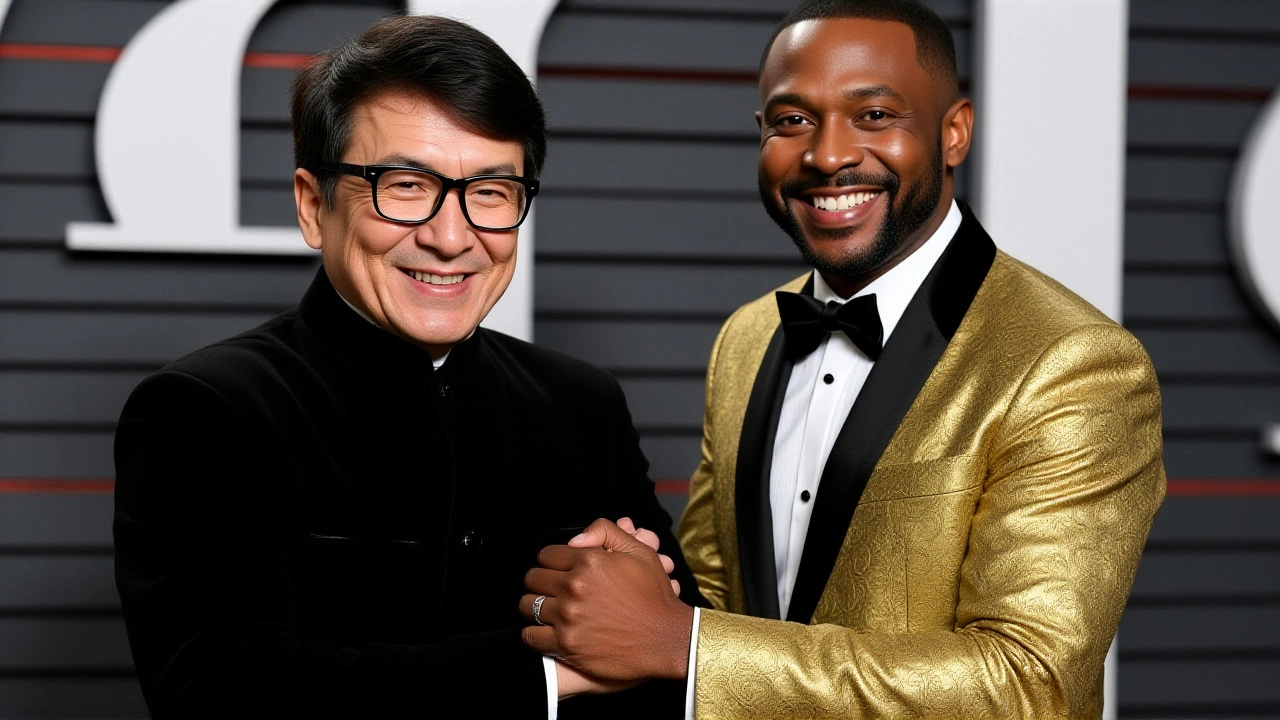
The original Rush Hour trilogy — Rush Hour (1998), Rush Hour 2 (2001), and Rush Hour 3 (2007) — grossed over $836 million worldwide. Starring Jackie Chan as Inspector Lee and Chris Tucker as Detective James Carter, the films were global hits built on chemistry, chaos, and comedy. But here’s the problem: Tucker, now 63, hasn’t starred in a studio film since 2007. He’s made cameos, done stand-up, and appeared on reality TV. But nothing with this scale.
Chan, 69, has been more active, though mostly in Chinese-language productions and family films. Neither has publicly commented on the revival. Meanwhile, Brett Ratner, who directed all three films, has been conspicuously absent from the conversation. Wagner hinted at the tension during the MS NOW segment: "RATNER ON A RED CARPET, NO MATTER THE POTENTIAL MONEY TO BE MADE BY THE FILM." Translation? He may not be welcome.
Paramount Skydance hasn’t named a director. No writers are attached. And while insiders say the budget will likely fall between $90 million and $140 million — matching previous installments — the casting dilemma looms large. Could they recast Carter? Reboot with a new partner for Chan? Or is this a one-last-hurrah for Tucker?
A Cultural Power Play?
It’s not just about action sequences and punchlines. As Michelle Elizabeth Goldberg of The New York Times put it during the MS NOW segment: "I think this is a bid for Trump to control culture. And yes, in the authoritarian sense — but also, the right has been desperate to get into Hollywood forever, right?"
That’s the real story here. For decades, conservative voices have complained that Hollywood is a liberal echo chamber. Trump, during his first term, famously praised films like American Sniper and Top Gun: Maverick while deriding "woke" cinema. Now, he’s not just criticizing — he’s creating. By leveraging his personal relationship with Ellison — a billionaire with deep ties to Republican donors and conservative media — Trump is inserting himself into the heart of pop culture.
This isn’t the first time a president has dabbled in entertainment. Reagan was an actor. Clinton hosted SNL. But none have used their office to directly broker a sequel. And none have done it with a franchise that’s culturally neutral — yet politically charged — in its appeal.
What Happens Next?
Paramount Skydance is expected to begin formal negotiations with Tucker and Chan by mid-December 2025. If both agree, pre-production could start in January. Filming might begin in late February or early March 2026, possibly in Los Angeles or Hong Kong, depending on Chan’s availability. A summer 2027 release is the target.
But the stakes go beyond box office. If Rush Hour 4 becomes a hit — and if it’s widely seen as a Trump-backed project — it could embolden other conservative figures to push for similar interventions. Think: a Die Hard reboot with a MAGA-themed villain. A Fast & Furious spin-off featuring a federal agent who "borders on patriotism." The implications are as surreal as they are significant.
The Legacy of a Franchise That Refused to Die
Launched by Mandeville Films in 1998, Rush Hour was never meant to be iconic. It was a summer action-comedy with a multicultural twist. But it worked. The chemistry between Chan and Tucker was electric. The humor was broad, the stunts were jaw-dropping, and the dialogue? Pure, unapologetic silliness. It was the kind of movie families watched together — and that’s exactly why it matters now.
When Trump says he wants "more Rush Hour," he’s not just talking about a movie. He’s talking about control. About narrative. About who gets to tell stories in America. And if a billionaire with a private jet and a studio lot says yes — then maybe, just maybe, the president doesn’t need Congress to make culture.
Frequently Asked Questions
Why is Trump involved in a movie sequel?
Trump has long expressed interest in shaping cultural narratives, especially those that resonate with his base. By reviving a globally popular, apolitical action-comedy franchise, he sidesteps direct controversy while still asserting influence over entertainment. It’s a low-risk, high-visibility way to signal that his administration can shape pop culture — not just policy.
Can Chris Tucker still carry a major film?
Tucker hasn’t headlined a studio film since 2007, but his star power hasn’t vanished. He remains a beloved figure in comedy circles and has a loyal fanbase. His return could be framed as a nostalgic event, similar to Stallone in Creed or Schwarzenegger in Terminator: Genisys. The challenge isn’t his acting — it’s logistics, scheduling, and whether he wants to return to a franchise that hasn’t had a sequel in 18 years.
Is Brett Ratner still involved?
No official word has been given, but Ratner’s absence is telling. After multiple allegations of misconduct surfaced in 2017, he’s been largely sidelined by major studios. Paramount Skydance may avoid him to prevent backlash — even if his name is synonymous with the franchise. A new director is likely, possibly someone with action-comedy experience like David Dobkin or even a rising talent from streaming.
How will Jackie Chan react?
Chan has never publicly aligned with U.S. politics and tends to avoid controversy. He’s been focused on Chinese cinema and family projects. If approached, he may accept the role — especially if the film is shot in Asia and offers creative control. But he’s also 69. His participation isn’t guaranteed, and his absence could force a reboot with a new co-star.
Could this become a political statement in the film?
So far, no script exists — and studio insiders say they plan to keep it light. But the pressure is there. Conservative donors may push for a villain who’s a "corrupt liberal official," or a plot where Carter defends "American values." The studio will likely resist overt politics to preserve global appeal. Still, subtext is hard to avoid when a president personally greenlights a project.
What does this mean for Hollywood’s future?
This sets a dangerous precedent. If a president can get a sequel made by calling a billionaire friend, then power isn’t just in legislation anymore — it’s in personal relationships. Studios may start prioritizing political access over creative merit. And if this succeeds, expect more presidential meddling — in music, TV, even video games. Culture is becoming another battleground.